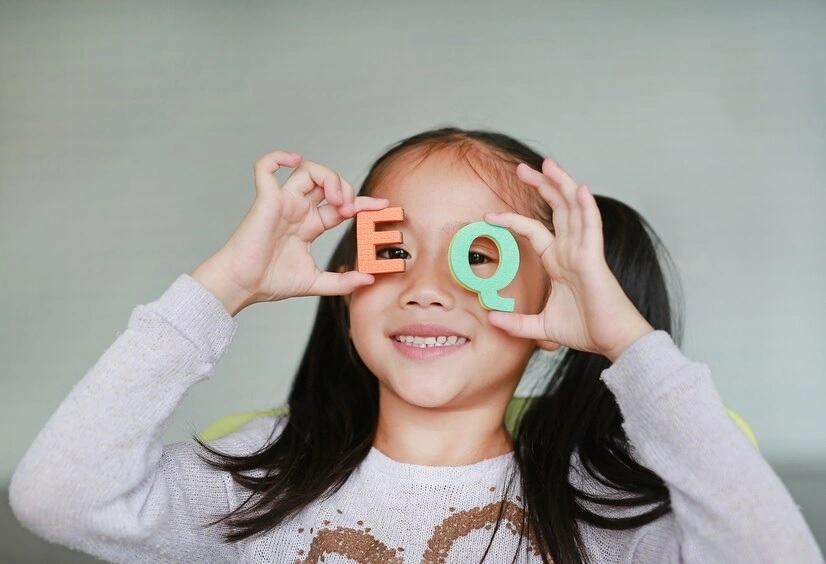
In a world where artificial intelligence is gradually reshaping everything from education to the workplace, modern parents are no longer only concerned about what their children will learn, but rather how they will adapt. As machines become capable of processing data at extraordinary speed, emotional intelligence and the ability to build real human connections are becoming the true “shield” that helps children thrive and stand out.
1. “Brain Rot” and the Challenge of Consuming Meaningless Content
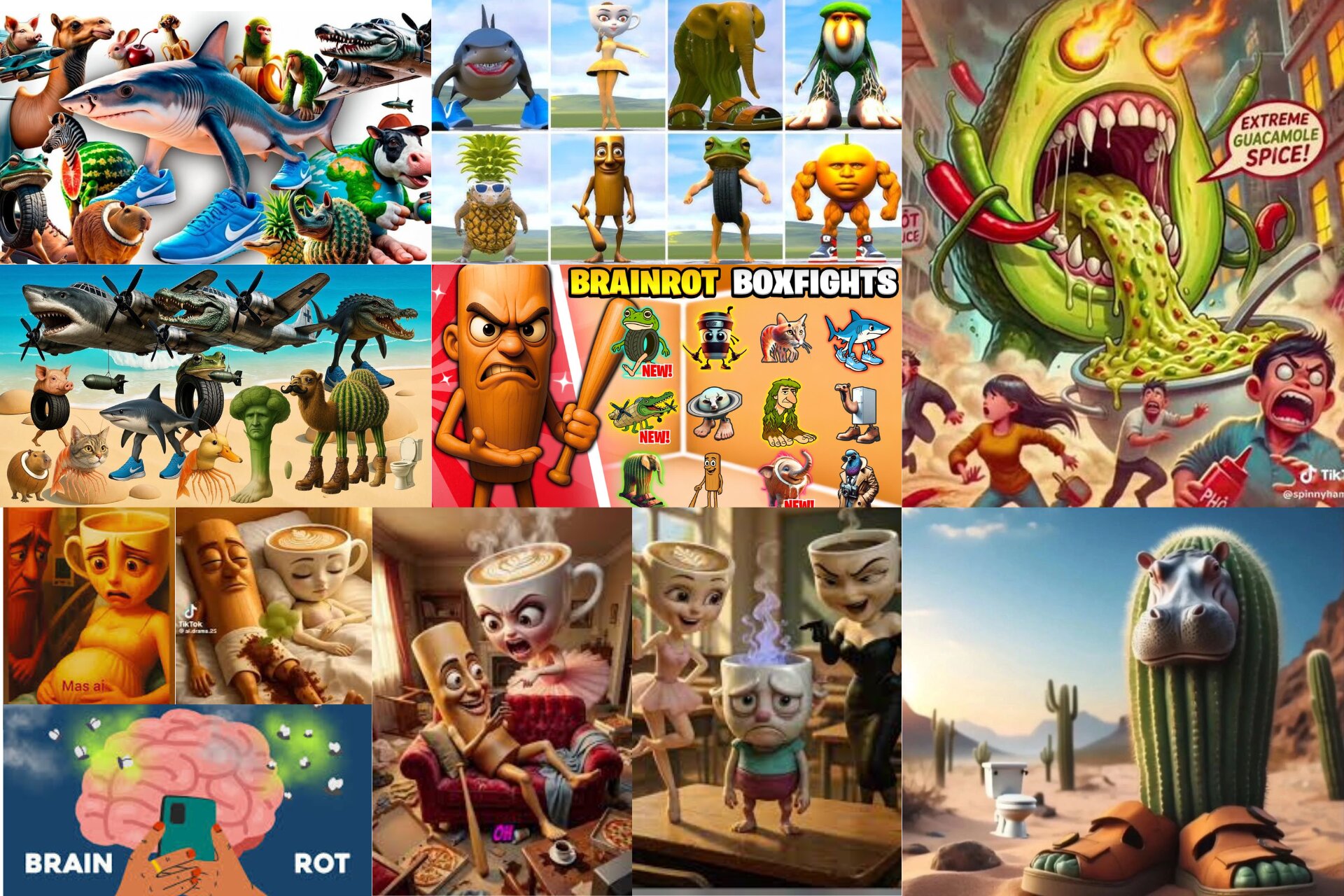
Oxford selected “brain rot” as its Word of the Year 2024, and that choice was far from random. The term describes a deeply concerning reality: the human mind, especially that of children, is gradually being eroded by excessive consumption of low-quality social media content. Short-form videos with relentless pacing and bizarre AI-generated characters — dancing coffee-headed figures, banana-bodied monkeys, and more — are dominating the screens of millions of children every day.
The mechanism behind this phenomenon can be clearly explained through neuroscience. Every time a child scrolls past a stimulating short video, the brain releases a small amount of dopamine, the neurotransmitter responsible for feelings of instant gratification. This cycle of “stimulation–reward” repeats itself hundreds of times a day, causing the brain to gradually lose patience for content that requires sustained attention and deeper thinking.
Children not only lose their ability to focus; they also begin mimicking nonsensical phrases, adopting distorted grammar from virtual characters, and, more importantly, developing the habit of expecting immediate answers instead of solving problems on their own. Educators describe this as a form of “cognitive debt” — a silent debt that accumulates over time until, when the moment comes to repay it, children no longer possess the mental capital they need.
2. Why AI will never replace emotional intelligence
At first glance, the answer may seem obvious, but the reality is more nuanced than many people assume. Today’s AI can create highly detailed travel itineraries down to the hour, solve complex problems within seconds, and even simulate emotional responses with remarkable sophistication. Yet there remains a boundary that no machine, regardless of technological advancement, can truly cross: the ability to create genuine meaning.
Machines process data. Humans assign values, stories, and human significance to that data. That is the fundamental difference. A child who grows up with strong emotional intelligence does not merely understand their own emotions; they can also read the emotional states of others, adjust their behaviour within different social contexts, and, most importantly, understand who they are in a constantly changing world. Self-awareness, self-regulation, and social adaptability are not skills that can simply be downloaded like an app. They are forged through real-life experiences, failures, and moments of moral decision-making when no one is there to provide instructions.
Even in tourism – an industry where AI is rapidly gaining ground — people still recognise that no intelligent chatbot can replace the feeling of being genuinely listened to and cared for by a real travel consultant. This is perhaps the clearest proof of all: in the age of AI, human value is not diminishing; it is becoming more precious than ever.
3. Experiential Travel: Fertile ground for developing emotional intelligence
If “brain rot” is the illness, then real-world experience is the remedy. Not because it is simple or comfortable, but precisely because it is neither simple nor always comfortable. Educational experts have long emphasised that emotional intelligence cannot be taught directly through textbooks or lectures. It is developed indirectly through the way life itself is structured, and travel is one of the most ideal environments for this process to unfold.
When children embark on a genuine journey — not merely watching videos about a destination, but physically experiencing it — they are confronted with open-ended situations that have no predefined answers. What happens when the map does not match reality? What should they do if the weather suddenly changes? How can they communicate with locals who speak a different language? In those moments, the brain cannot simply “scroll away” to the next piece of content. It is forced to pause, observe, process, and adapt. This is exactly how critical thinking and creativity are naturally and sustainably formed, grounded in three inseparable principles: Experience, Emotion, and Application.
4. The growing trend of river and ocean travel among young families
It is no coincidence that river and ocean travel are becoming increasingly popular among young families. Although different in rhythm and atmosphere, both forms of travel share one essential characteristic: they place human beings at the centre of nature, where technology has limited control and genuine presence becomes necessary.
River travel carries the beauty of stillness. Completely unlike the fast pace of modern life, journeys along rivers create a rare quiet space where children can truly observe: the flow of the water, the lives of people along the riverbanks, and even their own emotions when encountering unfamiliar cultures. This is a form of learning that no screen can replicate — learning through all the senses, learning through presence itself.


Ocean travel, on the other hand, offers a different kind of energy: liberating, expansive, and filled with challenges. Water sports, exploring coral reef ecosystems, or simply sitting and gazing at a seemingly endless horizon all help “reset” the brain from the constant cycle of rapid stimulation. More importantly, when children witness both the beauty of the ocean and its vulnerability in the face of climate change, they begin developing environmental awareness not because they were told to, but because they truly feel it. That is the difference between information and wisdom.
Interestingly, modern AI technology is actually supporting this trend in meaningful ways. Families can now design highly personalised journeys tailored to their interests and budgets, allowing each trip to become something unique — not mass-produced, but an experience carefully “crafted” for a specific child at a specific stage of development.


Reference source: WeTrek
5. Parents as the “Compass” guiding the way
In the digital era, there is no simple answer to the question: “How much technology is too much for children?” Completely banning technology is neither realistic nor effective. Yet unlimited freedom can also become a form of negligence. What children truly need is not necessarily fewer screens, but more meaning in their lives.
Parents, in this context, become the architects of the environment in which children grow. They can lead by example through healthy digital habits, accompany and explain to their children why real-life learning carries more value than instant answers, and most importantly, give them opportunities for genuine journeys, authentic experiences, and moments of truly living. Through these experiences, children gradually discover their own “inner compass” — understanding who they are and what they need in a world of constant change.
Emotional development is not something that can be taught directly. It is something formed indirectly, through the way we organise our lives and through the real journeys we choose to embark on together with our children.