In the era of the AI boom, where knowledge can be accessed in seconds, education is no longer about memorising theory. Instead, core values are shifting towards hands-on experience and experiential learning. This is why educational tourism (Edu-Travel) is becoming an inevitable trend in 2026, especially when combined with river cruises and Mekong Cruise itineraries.
No longer just simple field trips, the onboard learning model opens up a “classroom without walls”— where students directly interact with life, explore Vietnamese culture, and develop their thinking comprehensively.
Breaking the boundaries of thinking through river cruise journeys
Liberal education emphasises the experience of “seeing, hearing, and touching.” On a Mekong cruise experience, knowledge is not just a concept in books but becomes a “living curriculum.”
Students have the opportunity to directly observe the rhythm of life of people in the Mekong Delta, from riverside activities to traditional practices. Experiences such as listening to traditional opera, visiting brick-making villages, and visiting the Temple of Literature or the Temple of Meritorious Deities help them gain a deeper understanding of Vietnamese culture in the most authentic way.
An Ideal Environment for Developing Global Citizens
The space on board La Marguerite is not just a vacation spot, but also a multicultural learning environment. Here, students interact with international tourists and staff from many countries. Through this experience, they gradually develop important skills such as adaptability to new environments, open-mindedness and respect for differences, and intercultural communication skills. This is the foundation for becoming global citizens in the context of integration.
The development of educational tourism on Mekong cruise ships is closely linked to the 4S model (Smart – Slow – Small – Sustainable) – the foundation of a modern experience.
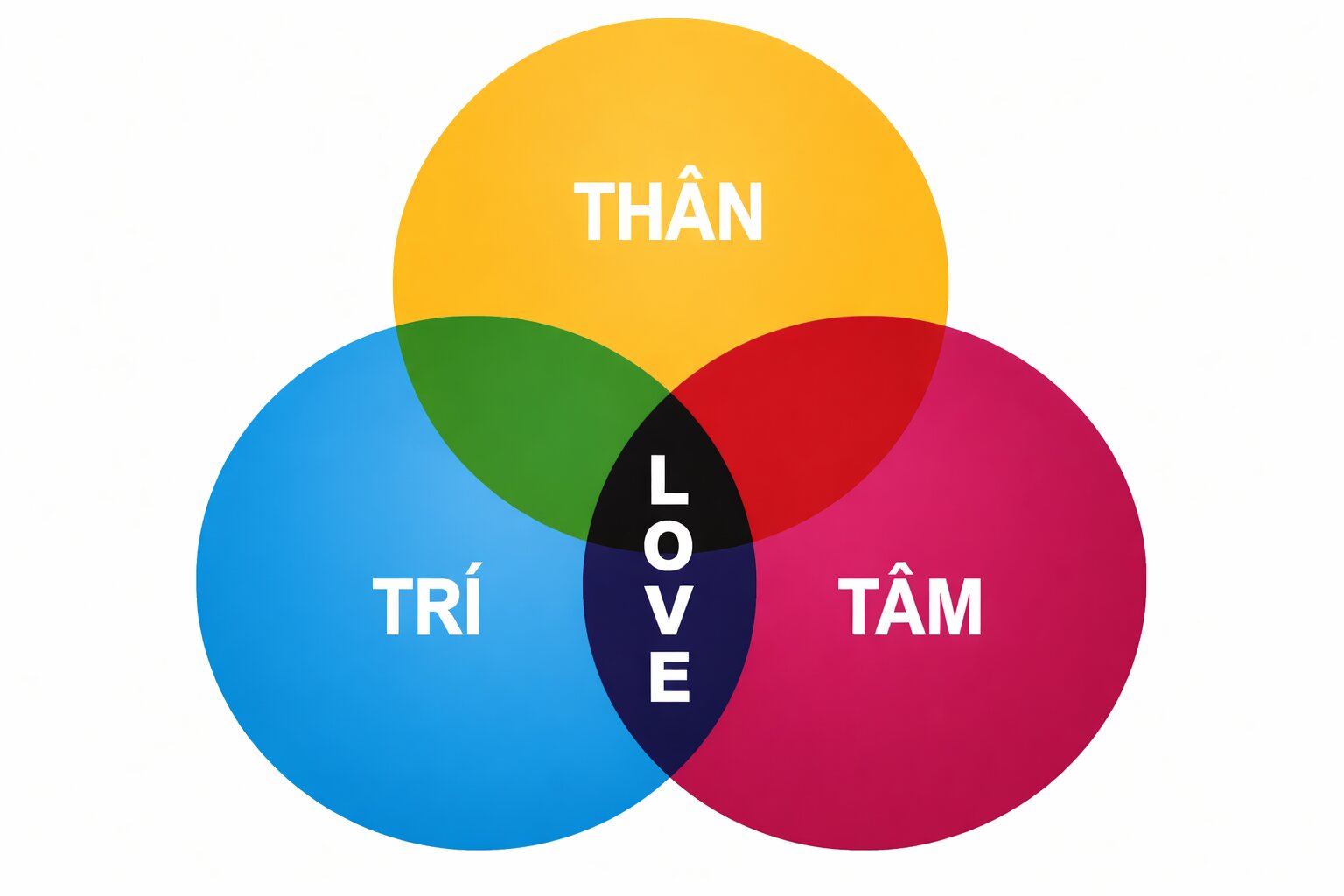
The cruise ship acts as a mobile hotel, completely eliminating the fatigue of constantly changing modes of transportation. When the body is safe, and energy is conserved (Thân an), the mind is at peace, and the intellect can freely develop its best qualities (Trí sáng).
Instead of learning theory, students directly experience how people live in harmony with nature, thereby raising awareness of environmental protection and preserving Vietnamese culture.
The enclosed, comfortable, and professionally operated space ensures safety, creating conditions for students to fully concentrate on learning and exploring.
Humanistic connection – when education goes beyond the classroom
One of the most profound values of educational tourism on the Mekong Cruise is the connection between people. Along the journey, the distance between teachers and students gradually disappears. This is evident when they watch the sunset together on the deck, participate in local cooking workshops, or share everyday stories over a cozy dinner.
Conclusion:
In an era where technology can replace many traditional learning methods, educational travel (Edu-Travel) has emerged as an inevitable direction, where hands-on experience becomes central to the learning process. River cruises and Mekong cruises not only help students access knowledge but also nurture emotions, develop critical thinking, and shape their personal identity.
At Focus Travel, each cruise trip, like La Marguerite, is not simply a journey of discovery, but a process of growth – where each experience brings students closer to a more knowledgeable, insightful, and well-rounded version of themselves.
Note:
Minh: It means clear, insightful, and discerning (like a shining light).
Triết: It means a deep understanding and clear reasoning about the nature of things, people, and the universe.
